


Mistake Overview – Where Buyers Actually Start Losing Money
Most buyers believe the cost of a custom shopping cart is simply the unit price.
In reality, price is only the surface layer.
Loss happens throughout the entire sourcing journey:
- supplier selection
- sample validation
- production execution
- post-delivery operation
The real issue is not price—it is accumulated risk across stages.
By the time problems appear, most cost has already been locked in.
Mistake 1 – Choosing the Wrong Supplier and Misjudging Capability (Time Is Hidden Cost)
In shopping cart manufacturer sourcing, many buyers confuse responsiveness with manufacturing strength.
Fast replies, low MOQ, and attractive pricing often create false confidence.
But real production capability is completely different.
Supplier Reality Comparison:
| Supplier Type | What Buyers See | Real Manufacturing Reality |
|---|---|---|
| Factory | Stable communication | Controlled production system |
| Trading Company | Fast response | Outsourced manufacturing risk |
| Workshop | Low price | High inconsistency risk |
Most sourcing failures start from this misjudgment.
Hidden cost most buyers ignore:
Time.
- repeated quotation cycles
- unclear engineering communication
- delayed sampling decisions
In procurement, time is already real money loss.
Mistake 2 – Believing the Sample Reflects Mass Production Reality
A folding shopping cart sample often creates false confidence.
It looks perfect, stable, and production-ready.
But samples are controlled conditions—not production reality.
Sample vs Mass Production Reality
- Sample: manually optimized
- Production: unavoidable batch variation
- Sample: higher-grade materials
- Production: material fluctuation across batches
- Sample: perfect assembly accuracy
- Production: tolerance accumulation over time
Sample approval is only a snapshot, not system validation.
For a deeper understanding of how OEM production actually works inside a factory, see our guide on how shopping carts are manufactured step by step in China.
👉https://strongbirdcart.com/blogs/news/shopping-cart-manufacturing-process
Mistake 3 – Ignoring Structural and Material System Weaknesses
Most failures do not appear immediately—they emerge after repeated use.
Typical issues include:
- wheel instability under continuous load
- frame fatigue after repeated stress cycles
- folding mechanism loosening over time
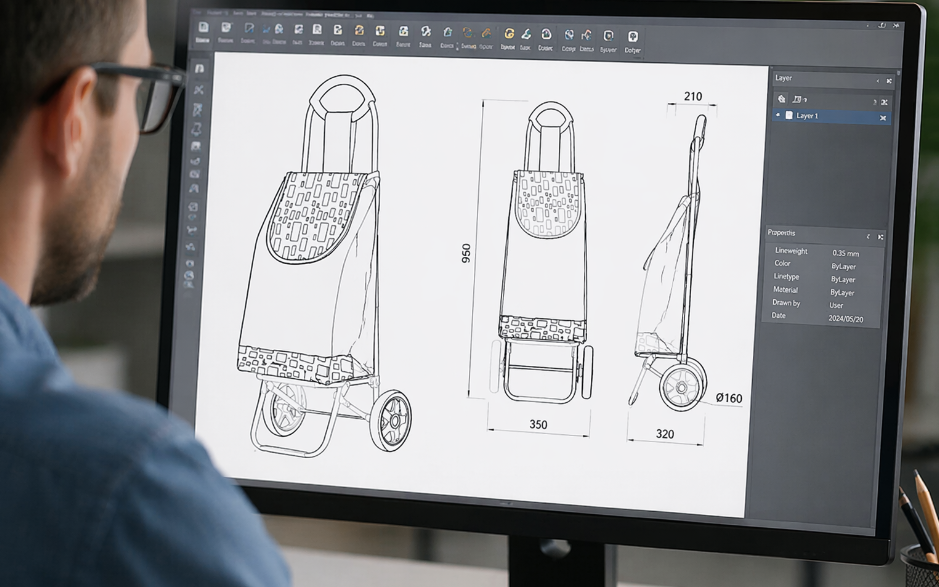
However, the most underestimated component is the shopping cart bag system.
Critical bag failure factors:
- fabric strength inconsistency
- stitching durability variation
- load stress concentration
- tearing after repeated usage cycles
In real retail and logistics environments, the bag often determines total product lifespan.
When it fails, the entire system fails.
Material selection plays a critical role in shopping cart durability, including steel frame structure, wheel system, and fabric strength. We break this down in detail in our materials and durability guide.
👉 https://strongbirdcart.com/blogs/news/shopping-carts-materials
 Mistake 4 – Underestimating After-Delivery Cost Explosion
Most buyers assume procurement ends after shipment.
In reality, this is where true cost exposure begins.
Post-Delivery Hidden Cost Breakdown:
| Cost Type | What Actually Happens | Why It Happens | Business Impact |
|---|---|---|---|
| Replacement Cost | Units fail after short use | Material/structural inconsistency | Continuous re-ordering increases total cost |
| Return & Logistics Cost | Products returned or replaced | Batch inconsistency issues | Freight cost exceeds product value |
| Warehouse Efficiency Loss | Cart instability slows operations | Poor structural durability | Reduced operational efficiency |
| Customer Complaint Cost | End users report issues | Real usage not tested in factory | Brand reputation damage |
| Downtime Cost | Operations interrupted | No backup supply strategy | Direct productivity loss |
The real cost is not failure—it is operational disruption.
Why Buyers Don’t Notice These Mistakes Until It’s Too Late
The core issue is fragmentation.
Each problem seems small:
- slight delay
- minor defect
- acceptable variation
But combined, they create significant financial damage.
Most buyers only evaluate unit price, not lifecycle cost.
This is the blind spot behind repeated sourcing failures.
How a Professional Custom Shopping Cart Manufacturer Prevents These Risks
A reliable shopping cart manufacturer does not rely on sample approval alone.
Instead, risks are controlled before production starts.
Factory Risk Prevention System:
| Procurement Risk | Factory Control System | Final Result for Buyer |
|---|---|---|
| Sample ≠ mass production consistency | Engineering pre-production validation | Production matches approved sample |
| Wheel failure after usage | Load cycling + endurance testing | Stable long-term performance |
| Frame deformation | Structural stress simulation | Improved durability |
| Batch inconsistency | IQC / IPQC / FQC system | Stable batch quality |
| Real-world failure | Scenario-based testing | Reduced post-delivery risk |
The difference is simple: risk is removed before production, not after failure.
Real Case Study – From Supplier Conflict to Trust Recovery
A U.S.-based local shopping cart brand previously ordered a batch of custom shopping carts from another Chinese factory.
Although samples were approved, the mass production units did not fully match the sample quality. After several weeks of retail use, customers began reporting instability issues and product complaints, which quickly affected brand reputation.
What the client told us during initial contact
When they first contacted us, their message was very direct:
“We already shipped one batch, but customers are complaining. The carts don’t feel like the sample anymore. We cannot risk another bad batch.”
They also shared internal retail feedback showing repeated issues with wheel instability and frame looseness.
Why they chose StrongBird in the end
After analyzing the situation, we identified that the issue was not only assembly variation, but also material inconsistency and load distribution mismatch between sampling and mass production.
Instead of offering a quick replacement quote, we provided:
- engineering root-cause explanation
- batch consistency improvement plan
- load and wheel durability testing data
This transparency changed everything.
They decided to rebuild the next production batch with us instead of continuing with their previous supplier.
Final Takeaway – The Real Cost Is Hidden Risk, Not Price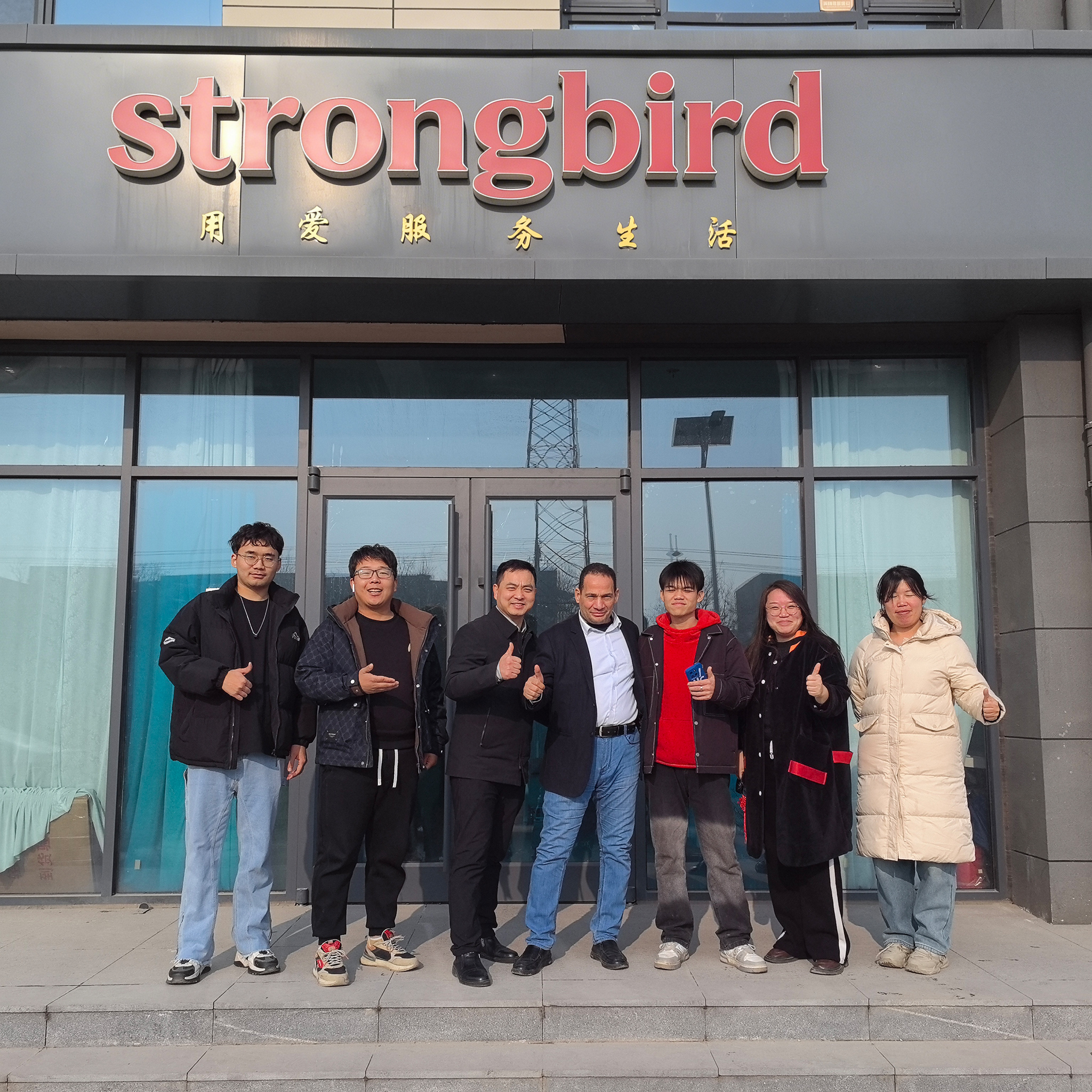
Most buyers think they are comparing suppliers.
In reality, they are comparing invisible risks:
- low price → future cost
- sample → production deviation
- communication → capability illusion
The real cost of a custom shopping cart is not purchase price—it is risk embedded in sourcing decisions.
FAQ – Custom Shopping Cart Sourcing from China
Why do shopping carts fail after delivery?
Because mass production conditions differ from sample testing and real usage environments.
Is sample approval enough?
No. Samples are controlled outputs and do not reflect production variability.
What matters most in a shopping cart?
Wheel system, frame structure, and bag material all determine durability.
How can buyers reduce sourcing risk?
By evaluating engineering capability, QC systems, and production consistency—not just price.
Work With StrongBird Factory
StrongBird supports global buyers with:
- OEM / ODM custom shopping cart manufacturing
- Engineering-level structural optimization
- Stable mass production systems
- Strict IQC / IPQC / FQC quality control
- Export experience for U.S. & EU markets
👉 Request OEM Custom Shopping Cart Solution
👉 Get Factory Pricing & Engineering Support


.png?w=1456&h=720)