

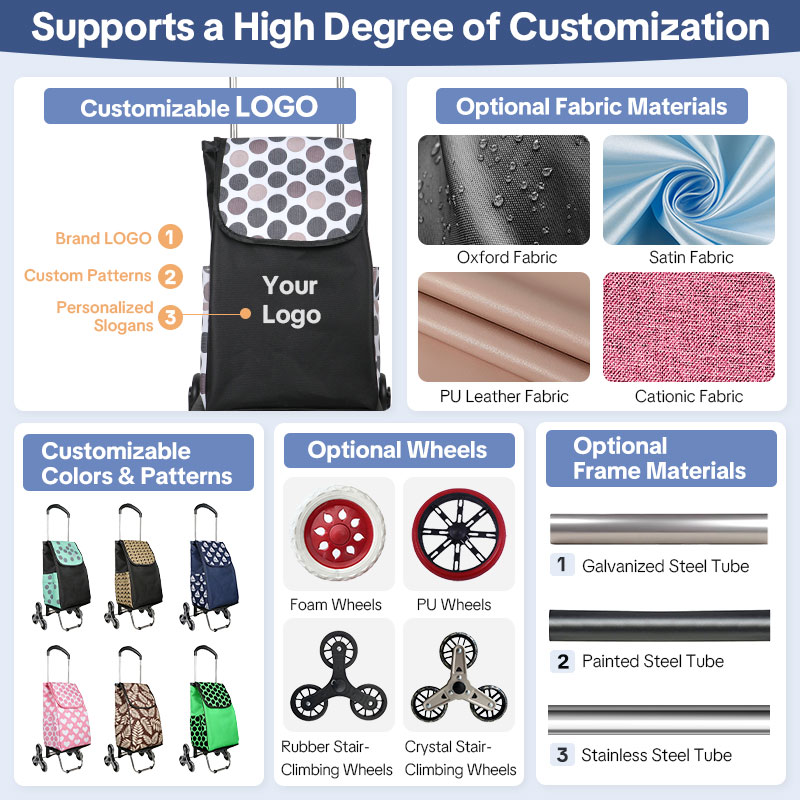
Main Materials Used in Shopping Carts
Different parts of a shopping cart require different materials. The frame provides structural strength, the storage bag protects groceries, while the wheels and handles determine comfort and mobility.
Frame Materials
The frame is the foundation of every shopping cart and has the greatest impact on load capacity and durability.
Common frame materials include:
- Aluminum Alloy – lightweight, corrosion-resistant, and commonly used in a foldable shopping cart.
- Stainless Steel – excellent strength and rust resistance, ideal for a stair climbing cart.
- Carbon Steel – offers higher load capacity for heavy-duty applications.
- Powder-Coated Steel – provides additional protection against scratches and rust.
Fabric & Storage Materials
Most shopping bags are designed to be durable, water-resistant, and easy to clean.
Common materials include:
- 600D Oxford fabric
- 1680D Oxford fabric
- PU-coated waterproof fabric
- Cationic fabric
- Mesh fabric for ventilation
These fabrics are widely used in products such as a plastic utility cart, grocery wagon, and foldable shopping carts.
Wheel Materials
Wheel quality directly affects comfort and maneuverability.
Common wheel materials include:
- PU wheels for smooth indoor movement
- EVA wheels for lightweight portability
- Rubber wheels for outdoor shock absorption
- PP wheels for economical models
- Nylon wheels for higher load capacity
Tri-wheel systems are commonly found on a stair climbing cart, making it easier to move groceries up and down stairs.
Handle & Structural Components
Comfort and safety also depend on smaller structural parts.
Typical materials include:
- EVA foam grips
- Rubber-coated handles
- Aluminum telescopic handles
- Reinforced hinges
- Stainless steel rivets
These components improve grip, folding stability, and long-term durability.
Material Comparison: Which Option Is Best?
| Material | Advantages | Best Used In |
|---|---|---|
| Aluminum Alloy | Lightweight, rust-resistant, easy to carry | Foldable shopping cart |
| Stainless Steel | Strong, highly durable, corrosion-resistant | Stair climbing cart |
| Carbon Steel | Excellent load capacity, heavy-duty performance | Utility shopping carts |
| Powder-Coated Steel | Better rust protection and longer lifespan | General shopping carts |
| Plastic (PP) | Lightweight, affordable, weather-resistant | Plastic utility cart |
How Different Materials Affect Shopping Cart Performance
Material selection influences far more than durability. It determines how a shopping cart performs in everyday situations.
Foldable shopping cart relies on lightweight aluminum frames and reinforced hinges to remain portable while maintaining structural strength.
A stair climbing cart combines reinforced steel frames with tri-wheel systems to improve balance and reduce lifting effort on stairs.
Shopping cart with seat requires stronger joints and reinforced frames to safely support both groceries and temporary seating.
For outdoor activities or larger loads, a grocery wagon often combines heavy-duty steel frames with waterproof Oxford fabric to maximize capacity and durability.
Comparison of Different Shopping Cart Types
| Shopping Cart Type | Typical Materials | Best For | Main Benefits |
|---|---|---|---|
| Foldable Shopping Cart | Aluminum frame, Oxford fabric, PU wheels | Daily shopping, limited storage | Lightweight, compact, easy to store |
| Stair Climbing Cart | Stainless steel frame, tri-wheel system | Apartments with stairs | Easier stair navigation, improved stability |
| Shopping Cart with Seat | Reinforced steel frame, padded seat | Elderly users, long shopping trips | Comfortable resting support |
| Plastic Utility Cart | Plastic body, PP wheels | Home and light-duty transport | Affordable, lightweight, weather-resistant |
| Grocery Wagon | Steel frame, waterproof fabric | Outdoor shopping, family use | Large capacity, versatile design |
How to Choose the Right Shopping Cart Based on Materials
When selecting a shopping cart, consider how and where it will be used.
If portability and compact storage are your priorities, a foldable shopping cart with an aluminum frame is usually the best choice.
For buildings without elevators, a stair climbing cart offers greater safety and convenience.
If comfort is important, especially for elderly users, a shopping cart with seat provides additional support during longer trips.
For outdoor activities or transporting larger loads, a grocery wagon offers the best balance of storage capacity and durability.
Frequently Asked Questions
What are shopping carts made of?
Most shopping carts combine aluminum, stainless steel, carbon steel, durable fabrics, plastics, and engineered wheel materials to balance strength, weight, and durability.
Which material is best for a foldable shopping cart?
Aluminum alloy is one of the most popular choices because it is lightweight, corrosion-resistant, and easy to carry.
Why do stair climbing carts use reinforced steel?
Reinforced steel provides the additional strength and stability needed to support heavy loads while moving safely on stairs.
Are plastic utility carts durable?
Yes. High-quality plastic utility carts are lightweight, weather-resistant, and suitable for everyday household tasks, although they generally carry lighter loads than steel-framed models.
Conclusion
Understanding what shopping carts are made of helps you choose a product that matches your daily needs rather than focusing only on appearance or price.
Whether you need the portability of a foldable shopping cart, the stability of a stair climbing cart, the comfort of a shopping cart with seat, or the versatility of a grocery wagon, selecting the right materials will improve safety, durability, and long-term performance.


.png?w=1456&h=720)