
If you run a restaurant with outdoor seating, or you're the person who organizes music festivals, food truck rallies, or corporate team‑building camps — you already know the struggle.
Chairs get stolen. Chairs break after three rainy weekends. Chairs that looked fine in storage suddenly have stains that won't come out. And don't even get me started on those flimsy folding chairs that collapse the moment someone leans back.
I've talked to dozens of cafe owners and event planners over the years. Almost every single one of them has the same complaint: "I just want a chair that looks good, holds up to heavy use, and doesn't make me want to cry when I see the replacement bill."
That's exactly why more and more people in food service and event production are switching to custom Kermit‑style chairs. Not the cheap ones. The ones built by people who actually understand commercial use.
Let me explain what I mean.
The real cost of “cheap” chairs (hint: it's not cheap at all)
A $15 folding chair feels like a good deal — until the second event. Then the fabric starts fraying. A leg bends. A customer sits down and the whole thing buckles. Suddenly you're not just replacing chairs, you're also dealing with an upset guest and a small PR headache.
Chairs are not just furniture. They directly affect customer experience, operating costs, and brand image.
For restaurants, that's lost tips and bad reviews. For event organizers, it's a logistical nightmare in the middle of a live show.
Cheap folding chairs may look attractive because of the low purchase price. However, after repeated outdoor use, problems often appear quickly:
- Frames become unstable
- Fabric wears out
- Parts become difficult to replace
- Cleaning becomes more time-consuming
- Replacement costs increase
For businesses that use hundreds of chairs every year, choosing the right product is not only about the initial price. It is about durability, maintenance, and long-term value.
This is why more restaurants, event companies, and hospitality businesses are investing in custom folding chairs designed specifically for commercial use.
Why Standard Folding Chairs Often Fail in Commercial Environments
Standard folding chairs may look affordable, but frequent commercial use quickly reveals their limitations. Restaurants, event organizers, and rental companies need chairs that can handle repeated use, outdoor conditions, and long-term operation.
| Challenge | Professional Chair Requirement |
|---|---|
| Frequent setup and storage | Lightweight folding design and strong structure |
| Outdoor weather exposure | Rust-resistant frame and durable fabric |
| Heavy daily use | Reinforced joints and stable construction |
| Long-term operation | Replaceable parts and easy maintenance |
For commercial buyers, the lowest price is not always the best choice. A reliable custom folding chair provides better durability, lower replacement costs, and stronger long-term value.
Why Restaurants and Event Companies Prefer Customized Solutions
Different businesses have different requirements.
A restaurant may need:
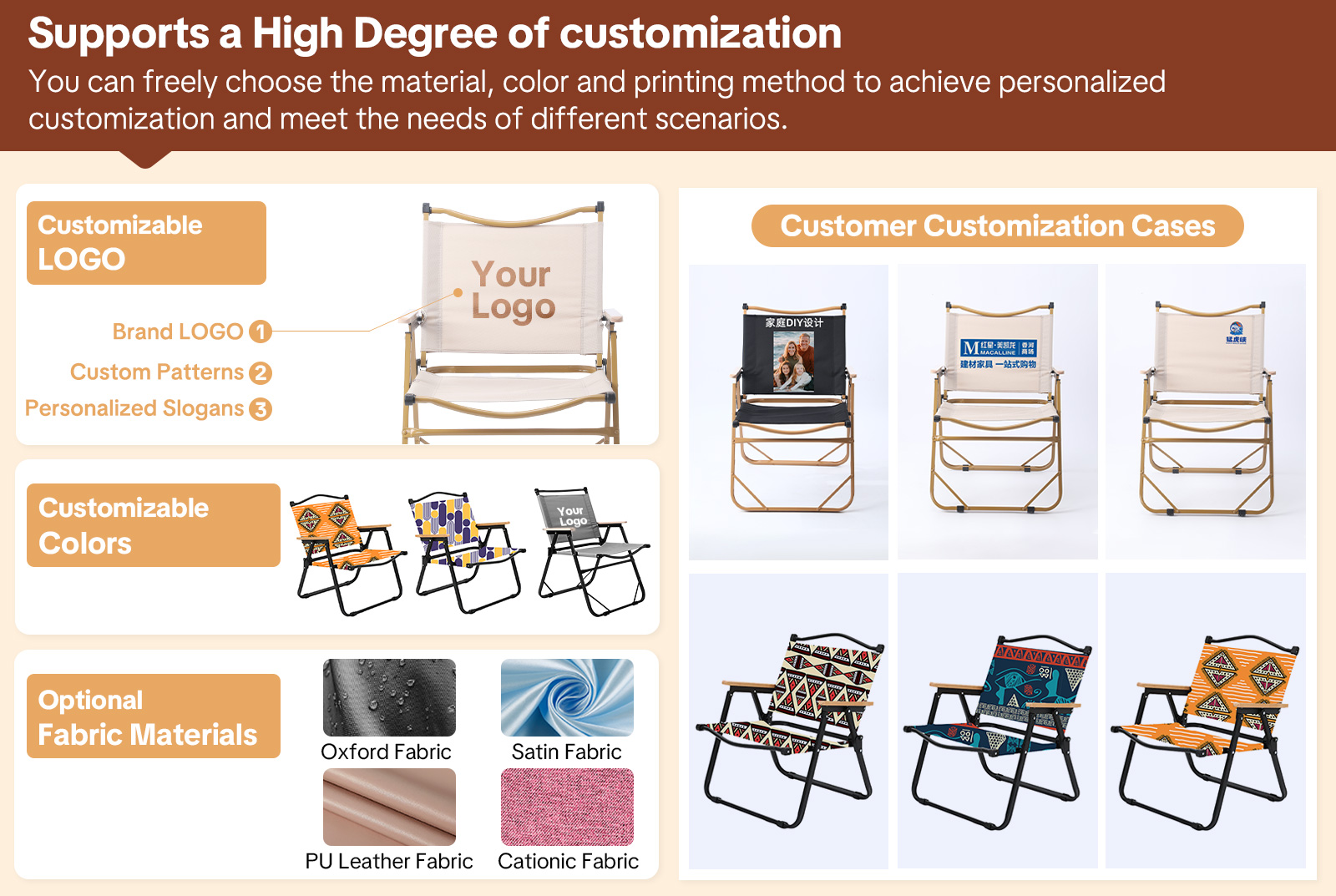
- Colors matching its brand identity
- Easy-clean fabrics
- Comfortable seating for long dining periods
An event organizer may need:
- Lightweight transportation
- Stackable storage
- Branding opportunities
A rental company may prioritize:
- Strong structures
- Replaceable components
- Long service life
This is why custom event chairs are becoming more popular among professional buyers.
Instead of purchasing a generic product, businesses can develop chairs based on their actual operating environment.
The practical questions organizers always ask me
“How many chairs can I get before my event?”
Typical production for a custom order runs 30–45 days from design approval to shipment. If you need samples first, add another 7–15 days. Plan ahead, and you'll be fine. Rush orders are sometimes possible — just ask.
“Do I have to order 1,000 chairs?”
Not anymore. A lot of manufacturers (including us) have lowered minimums. For basic logo printing on a standard Kermit chair, we can work with orders as low as 50–100 units. Perfect for testing a new event series or outfitting a single restaurant location.
“What if some chairs get damaged during the event?”
We keep spare parts — seat fabric, bolts, rubber feet. Order a few extras upfront, and you'll have replacements ready. Or just order 5–10% over your needed quantity. That's what most smart event planners do.
“Can I mix and match colors for different zones?”
Absolutely. Want blue chairs for the VIP area and orange for general admission? Done. Want your restaurant's outdoor section to match your brand's exact Pantone? We'll match it as close as fabric allows.
How StrongBird Supports Custom Chair Manufacturing
Developing reliable commercial chairs requires more than adding a logo to an existing design.
As an experienced OEM outdoor furniture manufacturer, StrongBird supports customers through the complete product development process.
StrongBird manufacturing process includes:
Product Development
We help customers evaluate:
- Target users
- Usage environment
- Functional requirements
- Customization needs
Prototype Validation
Before mass production, samples are developed and reviewed to confirm:
- Structure performance
- Material selection
- Product appearance
- User experience
Manufacturing Quality Control
During production, we focus on:
- Material inspection
- Frame processing
- Assembly consistency
- Final product checking
This approach helps retailers, distributors, and brands develop reliable products for their markets.
Build a Better Seating Solution for Your Business
Choosing the right chair is not only about buying furniture. It is about creating a reliable product that supports your customers, your events, and your brand reputation.
StrongBird helps businesses develop custom folding chairs, outdoor event chairs, and commercial seating solutions through professional manufacturing support. Beyond outdoor furniture, StrongBird is also an experienced shopping cart manufacturer and OEM partner, supporting global buyers with customized shopping carts, folding carts, and other practical mobility products.
Whether you are launching a new product line, upgrading restaurant outdoor seating, or sourcing wholesale folding chairs for large-scale events, our team can help you move from concept to production.
Contact StrongBird today to request product information, discuss your customization requirements, or start your OEM chair project.
Visit strongbird.shop or email support@strongbird.shop. Ask about sample orders, low MOQs, and free sea freight on qualifying orders.
Let's build chairs that actually work for your business.
.png?w=1456&h=720)