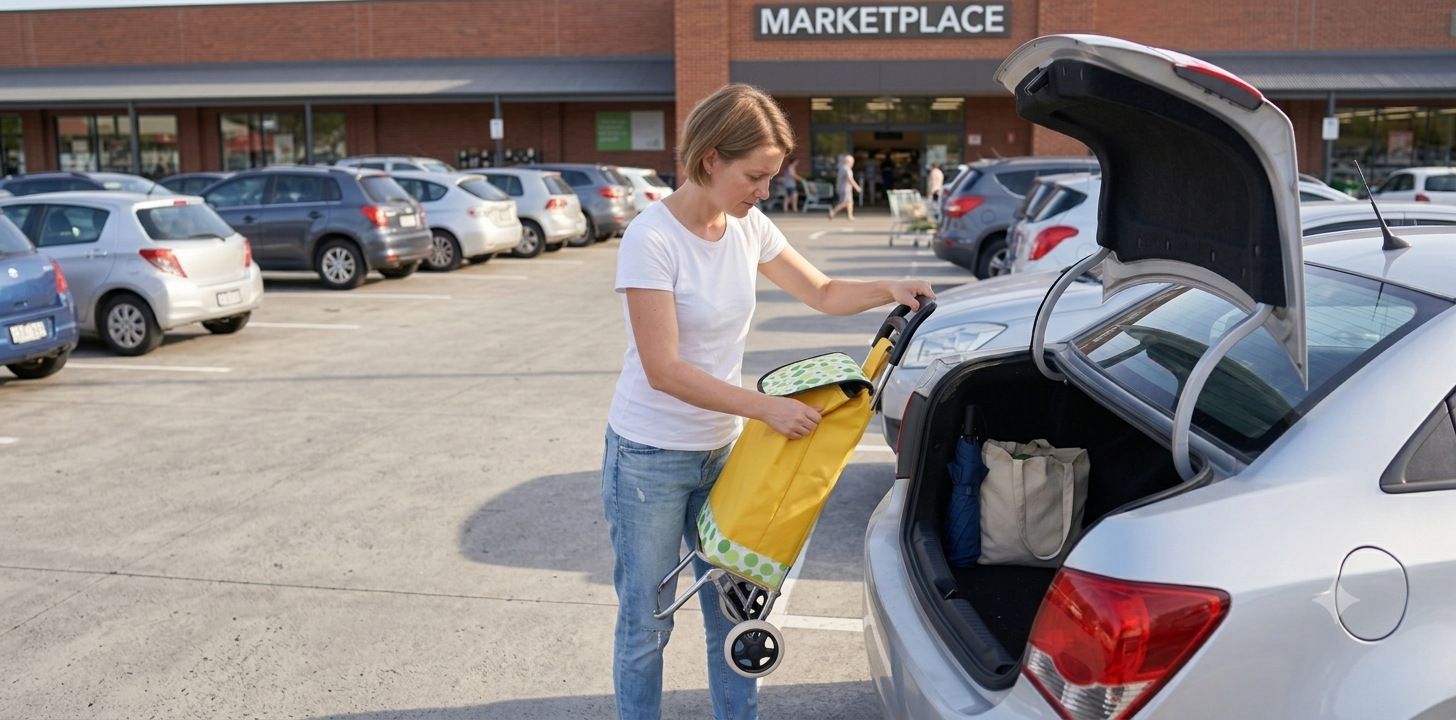


Why More People Are Carrying Groceries Without Driving
In many urban and suburban areas, grocery stores are closer than we realize. In fact, a short walk often takes less time than driving, especially when you factor in parking and traffic.
The real challenge is not shopping itself — it’s:
- Carrying heavy bags
- Balancing weight while walking
- Managing stairs or long sidewalks
This shift is part of a growing lifestyle trend : short-distance, car-free daily errands
Rethinking Grocery Trips Without a Car (It’s Easier Than You Think)
Car-free or “no-driving-for-small-trips” grocery shopping is not about limitation—it’s about convenience.
In many daily situations, walking to a nearby store or supermarket is actually faster than driving. The real challenge is not the shopping itself, but how to carry everything back comfortably.
This is where simple mobility tools like a grocery shopping cart start to make a real difference in everyday life.
They turn a short walk into a practical, stress-free shopping routine instead of a heavy carrying problem.

Why Carrying Matters More Than Distance
Most grocery shopping carts are designed based on simple mobility engineering principles rather than just storage capacity.
For example:
- Steel or aluminum frames are commonly used to ensure stability during movement
- Weight distribution is designed to reduce strain on wrists and shoulders
- Wheel structures vary depending on terrain (flat ground vs stairs vs uneven sidewalks)
A typical grocery shopping cart can safely carry between 15–50kg, depending on material and wheel design.
This is why choosing the right type of cart is not just about convenience—it directly affects safety and physical effort.
Practical Ways to Carry Groceries Home More Comfortably
Once you remove the idea that every grocery trip requires a car, the next step is choosing the right way to carry what you buy.
Different living environments require different solutions:
Everyday Walking Trips with a Grocery Shopping Cart
For quick supermarket visits or small daily purchases, a grocery shopping cart makes it easy to move items without carrying weight by hand. It is especially useful for people who shop frequently but buy in smaller amounts.
Urban Convenience with a Shopping Cart
A shopping cart is ideal for city living, where stores are often within walking distance. It helps turn short errands into simple walking routines instead of vehicle-based trips.
Apartment Living and Stair Challenges with Stair Climbing Carts
If you live in a walk-up apartment or need to handle stairs, stair climbing carts are designed to reduce physical effort when moving groceries between floors. This makes carrying heavier items feel much more manageable.
Everyday Flexibility with the Best Shopping Cart
For users who want one solution for multiple situations, a best shopping cart offers versatility for groceries, household items, and mixed shopping needs. It adapts to different daily tasks instead of limiting usage to one scenario.
How to Choose the Right Option for Your Lifestyle
Instead of choosing randomly, think in terms of your daily environment:
- Do you live in a walk-up apartment? → Stair climbing cart
- Do you only shop small amounts daily? → Shopping cart
- Do you want one solution for everything? → Utility cart
- Do you walk to supermarkets regularly? → Grocery shopping cart
The right choice depends less on the product — and more on your daily routine.
| Daily Situation | Problem | Best Solution | Product Type |
|---|---|---|---|
| Quick small grocery trip | Don’t want to drive for a few items | Walk to store comfortably | Shopping Trolley |
| Carrying groceries home | Bags feel heavy | Roll instead of carry | Grocery Shopping Cart |
| Apartment with stairs | Hard to lift groceries | Reduce physical strain | Stair Climbing Carts |
| Mixed household shopping | Multiple items + weight | Flexible transport | Best Utility Cart |
| Elderly users shopping | Fatigue & balance issues | Stable support + rest | Grocery Shopping Cart with seat (optional angle) |
The Real Shift — From “Driving for Groceries” to “Walking Smart”
Once people realize that grocery shopping doesn’t need to revolve around driving, something interesting happens.
Short trips become more flexible. Shopping becomes less of a planned “task” and more of a natural part of daily movement.
Instead of thinking:
“I have to drive to the store,”
people start thinking:
“I can just walk and bring it back easily.”
And that small mindset shift is exactly where tools like a grocery shopping cart change everyday life.
FAQ — Carrying Groceries Without a Car
Do I need a car to carry groceries home?
No. Many people successfully use carts or trolleys to bring groceries home without driving.
What is the best way to carry groceries without a car?
Using tools like a grocery shopping cart or shopping trolley makes walking trips much easier.
Are stair climbing carts worth it?
Yes, especially for people living in apartments with stairs or carrying heavier items regularly.
What is a utility cart used for?
A utility cart can be used for groceries, household items, and other daily transport needs.
| Product Type | Best For | Key Advantage | Limitation |
|---|---|---|---|
| Basic Shopping Trolley | Short daily grocery trips on flat ground | Lightweight, simple structure, easy to use | Limited load capacity, not suitable for stairs |
| Foldable Shopping Trolley | Urban users with limited storage space | Space-saving, easy to store and carry | Slightly less stable than rigid-frame carts |
| Stair Climbing Cart | Apartment living with stairs or no elevator | Reduces lifting effort, improves safety on stairs | Heavier structure, higher cost |
| Utility Shopping Cart | Heavy groceries, mixed household items, bulk shopping | High load capacity, versatile usage | Bulkier when folded, less portable |
| Shopping Cart With Seat | Elderly users or long shopping trips | Provides resting support + mobility | Heavier, requires more storage space |
Final Thoughts on Carrying Groceries Without Driving
The idea that every grocery trip requires driving is slowly changing. In many daily situations, especially for small purchases, it simply doesn’t make sense to start a car just to go to the store and back.
With the right tools like a grocery shopping cart, shopping trolley, stair climbing carts, or a best utility cart, carrying groceries home becomes easier, more efficient, and better aligned with modern everyday life.
Manufacturing & Design Perspective (Authority Boost)
As a manufacturer of mobility and utility carts, product design is not only about appearance but also about structural safety and daily usability.
In production, key considerations include:
- Frame thickness and load-bearing stability
- Wheel material and rotation resistance
- Folding mechanism durability after repeated use
- Safety performance under real household conditions
These factors determine whether a grocery shopping cart performs reliably in everyday use—not just in design specifications.